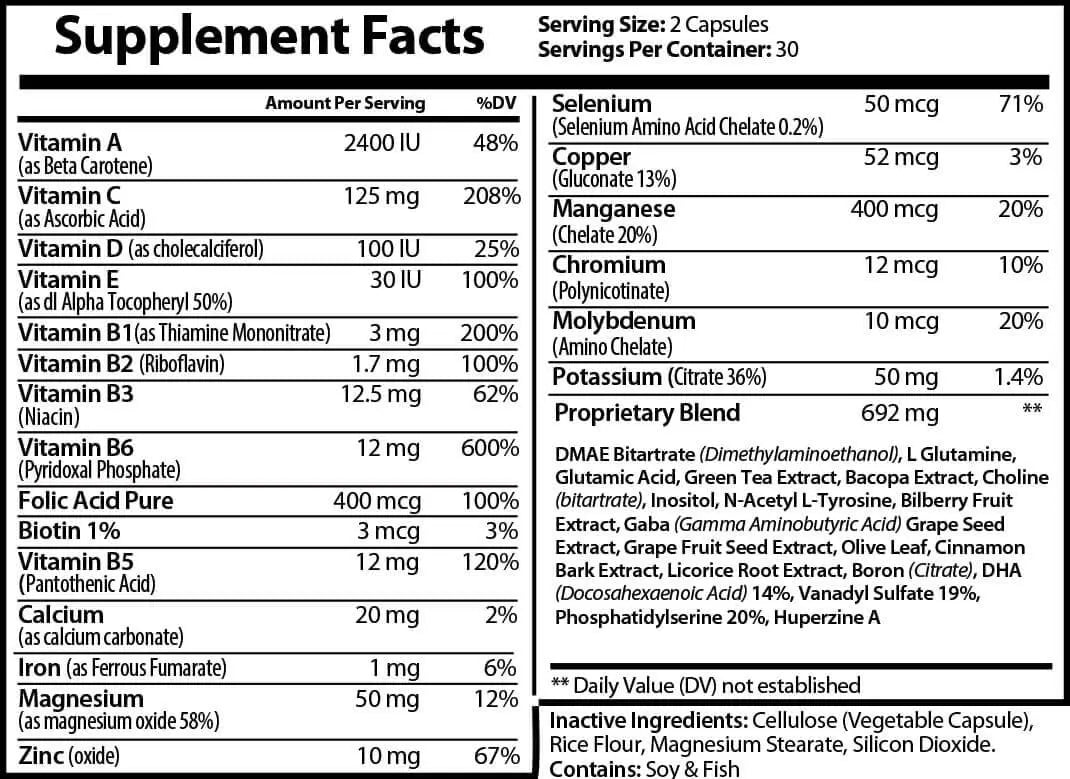
| Formula Ingredients |
Benefits of Each |
| Vitamin A |
- It supports vision, skin, and immune health and increases antioxidant support.
Supports antioxidant function via decreased inflammatory cytokines (inflammation), decreased reactive oxygen species, and increased l-glutathione production (master antioxidant).
- Supports visual health via increased plasma vitamin A in macular (eye) tissues.
|
| Vitamin C |
- Supports immune, cardiovascular, skin, cognitive, fat-burning, and digestive health.
- Supports immune health via increased oxidant, free radical scavenging, and fueling neutrophilic (immune cell) activity in chemotaxis, phagocytosis, and microbial killing.
- Supports fat burning by increasing carnitine biosynthesis (a molecule required for mitochondrial fatty acid oxidation).
- Supports accelerate bone healing after a fracture, increase type I collagen synthesis, and reduce oxidative stress (inflammation).
|
| Vitamin D |
- Supports exercise performance, immune health, muscle growth, optimal bone health, hormonal health, immune function, increased sexual health, cardiovascular health, glucose tolerance, strength, and positive mood.
- Supports hormonal health via high amounts of vitamin D receptor (VDR) activity in hormone-based adverse feedback loop reactions.
- Supports cardiovascular health via improved calcium absorption, reduced atherosclerotic activity, stimulates cardiomyocytes, and improves vascular health.
- Supports exercise performance via reduced exercise-associated inflammation and muscle damage.
- Supports sexual health via increased Vitamin D receptor activity of testosterone production.
- Supports immune function via decreases of inflammatory cytokines and aiding immune cells.
- Supports joint health via regulating calcium and phosphorus and bone remodeling, along with other calcium-regulating actions.
|
| Vitamin E |
- Supports immune function, cognitive health, cardiovascular health, and bone health.
- It supports immune health via neutralizing free radicals and reactive oxygen species and increases T lymphocyte-mediated immune function.
- Supports cardiovascular health via reduced cholesterol.
- Supports cognitive function via reduced oxidative stress, inflammation, and DNA damage of neuronal tissues.
|
| Vitamin B1 (Thiamine) |
- Supports aerobic energy metabolism (oxidative phosphorylation), cell growth, optimal neuronal conduction (nerve impulses), and cardiovascular health.
- It supports cardiovascular function and is a neuroprotective agent in individuals with vitamin B-1 deficiencies.
|
| Vitamin B2 (Riboflavin) |
- It supports the conversion and activation of other B vitamins and red blood cell production and is a cofactor for glucose and fat metabolism (energy production).
|
| Vitamin B3 (Niacin) |
- Significant B vitamin that supports cardiovascular health by inhibiting hepatic(liver) triglyceride synthesis, reducing very low-density lipoprotein (VLDL) secretion, and increasing HDL plasma concentrations.
- Reduces conversion of VLDL into LDL proteins and serum lipoprotein concentrations in plasma (blood).
- Vital for regulation of gene expression, cell cycle progression, DNA repair, and cell death.
- Supports healthy inflammatory response via antioxidant and anti-apoptotic (prevention of cell death) properties
- It prevents pathologies(diseases) such as Pellagra and reduces the prevalence of nervous anorexia, cancer, and Crohn's disease.
- Supports sensitization of tumors to radiation via apoptosis (cell death) cascade of tumor mass and improves oxygen delivery to malignant tissues (cancer cells).
- Supports cognitive health by reducing age-related decline of NAD+, increasing quinolinic acid, and reducing neuroinflammation.
- Increased niacin-associated NAD+ levels have been shown to increase neurotransmission, learning, and memory.
- Niacin reduces the prevalence of neurodegenerative pathologies by preventing mitochondrial dysfunction.
|
| Vitamin B6 |
- Serves as a cofactor in more than 150 enzymatic reactions associated with blood sugar regulation, immunity, cardiovascular function, neuronal health, metabolic, and digestive health.
- Reduces plasma glucose (blood sugar levels) by inhibiting the activity of small-intestinal α-glucosidases (enzymes associated with glucose metabolism).
- It functions as an antioxidant by counteracting the formation of reactive oxygen species (inflammatory markers) and advanced glycation end-products.
- May support blood sugar regulation in women with gestational diabetes.
- Cofactor for enzymes involved in DNA metabolism.
|
| Folic Acid |
- It may support proper cell growth and DNA synthesis.
|
| Biotin |
- Supports the conversion of food into cellular energy, hair health, skin health, and cognitive function.
- Enhances glucose breakdown into skeletal muscle tissue.
|
| Vitamin B5 |
- Supports energy production, cell growth, cell repair, cognitive function, increased hippocampal volume (memory), and optimized bioenergetics (burning of carbohydrates, fat, and protein).
|
| Calcium |
- Supports bone health, muscle function, and cardiovascular health.
- Regulates processes of bone resorption, mineralization, and fracture repair.
- Increases the effect of physical exercise on bone mineral acquisition in the period preceding puberty.
- Prevents the development of preeclampsia.
|
| Iron |
- Supports red blood cell formation, immune function, and antioxidant support.
- May increase oxygen uptake into red blood cells of iron-deficient individuals.
- It may support the gut health of iron-deficient individuals.
- Combats anemia in iron-deficient individuals.
|
| Magnesium |
- Supports optimal nerve function, muscle contractions, cardiovascular and bone health, and decreased anxiety.
- Supports biological reactions such as ATP-fueled reactions and pancreatic insulin secretion.
- Supports the reduction of systolic blood pressure, fasting glucose, triglycerides, and healthy HDL levels.
- Reduces peripheral cortisol levels in the CNS, supporting relaxation and decreased anxiety.
|
| Zinc |
- Supports immune function, skin health, cognitive function, and vision.
- Supports stimulation of the innate and adaptive immune system.
- Supports the activation of lymphocytes and activation of innate and T cell-mediated immunity.
- Supports cognitive function by modulation of neuronal signaling in areas of the brain associated with memory and learning (hippocampus).
|
| Selenium |
- Supports antioxidant function, cardiovascular health, cognitive function, thyroid health, and immune health.
- Combats atherosclerosis, high cholesterol (hypercholesterolemia), and type 1 diabetes.
- Supports thyroid health via decreased circulating thyroid autoantibodies in patients with chronic autoimmune thyroiditis (AIT).
- Increases the activity of selenoproteins that decrease reactive oxygen species (inflammation), increase natural killer activity, and increase glutathione (master antioxidant) levels.
|
| Copper |
- Supports healthy blood sugar levels, energy metabolism, and cholesterol management.
|
| Manganese |
- Supports enzymatic antioxidant reactions, increased bone mineral density, and blood sugar regulation.
|
| Chromium |
- It supports insulin function, reduces cholesterol, improves blood sugar regulation, and may lower cholesterol.
|
| Molybdenum |
- Increases enzymatic reactions involved in sulfite metabolism and detoxification.
|
| DMAE Bitartrate |
- Increases acetylcholine levels in the brain.
|
| L-Glutamine |
- The most abundant amino acid in skeletal muscle fuels immune cells, improves exercise recovery, and optimizes the gut microbiome.
- Vital for lymphocyte (immune cell) proliferation (growth) and paramount in neutrophil (immune cell) destruction of bacteria.
- Vital for activating genetic signals that support immune function and vitality.
- Glutamine is utilized by immune cells at high rates during catabolic conditions (post-surgery, sepsis, burns, and extreme exercise.
|
| Glutamic Acid |
- Supports cognitive function and focus.
|
| Green Tea Extract |
- A potent polyphenolic antioxidant that supports blood pressure, insulin sensitivity, and metabolic health.
- High in ECGC (epigallocatechin gallate).
- ECGC reduces body fat mass and increases fat oxidation(burning) and caloric expenditure during exercise.
- Potent anti-inflammatory compound supports glutathione production and inhibits pro-inflammatory markers (cytokines).
- Reduces oxidative stress (chronic inflammation in the body).
|
| Choline |
- Essential for cell membrane integrity, cell messaging, fat metabolism, DNA synthesis, immune support, and nervous system function.
- Serves as a methyl donor and precursor for the production of cell membranes.
- Precursor for acetylcholine (neurotransmitter), which activates receptors in the central nervous system-mediated immune responses (α7nAchR).
- Lifelong choline supplementation may combat neurodegenerative diseases by reducing amyloid-β plaque load (plaques of degrading neurons).
- Reduces the concentration of total homocysteine (inflammation marker) in individuals with low levels of folate and other B vitamins (B₂, B₆, and B₁₂).
|
| Inositol |
- It supports liver detoxification, combats metabolic syndrome, and acts as an antioxidant.
- Combats metabolic syndrome via reduced levels of triglycerides, total, and LDL-cholesterol.
- Supports antioxidant function via reduced levels of reactive oxygen species and inflammatory markers (interleukin).
|
| N-Acetyl Tyrosine |
- Supports memory, cognitive flexibility, the executive function of the brain, and convergent thinking.
- The precursor to dopamine is vital for dopamine synthesis in the brain.
- Supports cognitive function in individuals with high amounts of stress and anxiety.
- Increases dopamine levels in highly stressed individuals.
|
| Bilberry Fruit |
- Supports vision health, cardiovascular function, increased nitric oxide production, and antioxidant support.
|
| Grape Seed Extract |
- It supports increased nitric oxide production, reduces blood pressure, reduces DNA damage, increases collagen production, increases bone strength, and acts as a neuroprotective agent.
- Supports antioxidant function via modulation of antioxidant enzyme expression, protection against oxidative damage, and reduced reactive oxygen species.
- Supports cardiovascular health via reduced atherosclerosis, inhibiting lipid peroxidation, and improving endothelial vascular function.
|
| Olive Leaf |
- Supports cardiovascular health, antioxidant function, and controlled blood sugar levels.
- Supports Cardiovascular Health by reducing systolic BP, LDL, and inflammatory biomarkers.
- It supports antioxidant function via anti-inflammatory polyphenols that protect against DNA damage initiated by free radicals.
- Combats major inflammatory pathways via anti-inflammatory change involving the inflammation pathway (NF-κB inhibition).
- Supports blood sugar regulation via improved insulin sensitivity and pancreatic β-cell (cells responsible for secreting insulin) secretory capacity.
|
| Licorice Root |
- Supports anti-inflammatory, anti-allergenic, and antimicrobial properties.
|
| Boron |
- Supports increased bone mineral density, muscle function, hormonal balance, and immune function.
|
| DHA (Fish Oil) |
- Vital for optimal cardiovascular, hormonal, immune, cognitive, and digestive health, and recovery from exercise.
- Fish oil consumption of 6 grams daily has been shown to reduce inflammation, muscle soreness, and pain perception in exercising individuals.
- It increases skeletal muscle hypertrophy more than individuals consuming only whey protein post-exercise.
- Supports cardiovascular health by decreasing atrial fibrillation, atherosclerosis (plaque buildup), thrombosis, and blood pressure, and supporting blood lipid profiles (cholesterol panel).
- Increased nitric oxide production lowers blood pressure and induces endothelial relaxation.
- Supports healthy information by decreasing C-reactive protein (inflammatory markers) in the body and increasing insulin sensitivity.
- It supports cognitive health by increasing the concentration of omega-3 fatty acids in the cell membranes of the cerebral cortex and synaptic vesicles.
|
| Vanadyl Sulfate |
- Supports blood sugar regulation via improved insulin sensitivity and pancreatic beta-cell function (cells that produce insulin).
|
| Phosphatidylserine |
- It supports cognitive function, memory, and focus, and reduces stress.
- Reduces the prevalence of short-term memory loss in ADHD patients and improves prefrontal cortex (PFC) pyramidal cell function.
- Increases dopamine and acetylcholine release via maintenance of acetylcholine supply.
- Reduces cortisol levels in the frontal Brain regions during stressful activity.
|
| Huperzine A |
- It supports cognitive function, memory, and focus, and combats neurodegenerative disease.
- Combats neurodegenerative disease via improvement of cognitive function, daily living activity, and global clinical assessment in participants with Alzheimer's disease.
|